Strategy guides
Every game here rewards a way of thinking. These guides explain it: what strong players look at first, the patterns worth learning, the mistakes that cost the most, and for our own games the mathematics underneath. Each guide ends with a puzzle to practise on.
Originals
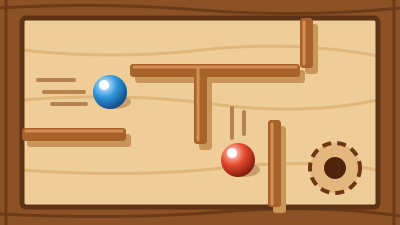
How to solve Tilt: read the last move, then use marbles as walls
Work out the final tilt from the rings, park one marble against another, and spot the boards where a parked marble has to leave its ring to make par.
5 min read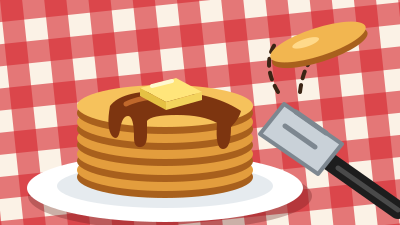
How to sort Flapjack in par: count the gaps, then close them
Why the textbook two-flips-per-pancake method misses par, how counting gaps tells you the fewest flips possible, and the one-glance rule for a flip that closes a gap.
5 min read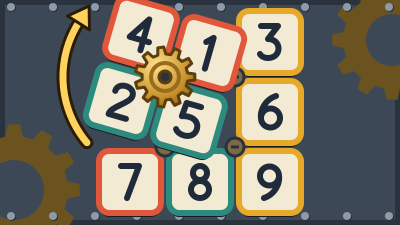
How to solve Twist: parity, the corner rule and the 15-twist grid
Why two swapped tiles are nine twists from done, which corner to fix first so three rotors can finish, and how close each method gets to par.
5 min read
How to balance Seesaw fast: budget the sides before you place
Turn the beam into one number, place the heaviest weight first with a reach check, and finish with the small ones. It cuts trial and error by more than half.
5 min read
How to last longer in Burst: prime first, fire big chains
Why chains of two cost you drops, which bubble to light first, and the simple prime-then-fire rule that took our test player from level 6 to level 8.
5 min read
How to score lower in Eyeball: tricks by eye for all five figures
Halve instead of guess, slide both sides of the parallelogram, and why wide angles and shallow crossings cost the most points, with numbers from 100,000 figures.
5 min read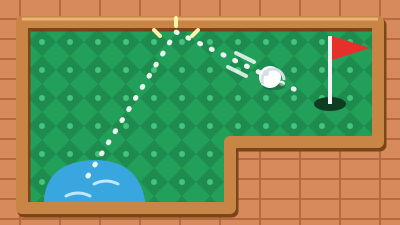
How to beat par in Putt: bank shots, soft putts and the robot's gaps
The stretched-mirror rule for bank shots in our physics, how fast the cup lets a ball in, and where the par robot leaves strokes you can take.
5 min read
How to mix closer in Mix: hue first, then mud, and why five drops are not enough
Two drops of rose turn grass green into olive brown. Which tube to set first, how many drops a match needs, and what one drop too many costs, measured.
5 min read
How to solve Odd Coin: count possibilities, split them in three
Why four against four is the only opening for twelve coins, how to mix suspects after a tip, and the counting rule that tells you par before you weigh.
5 min read
How to solve Fold: read the target backwards, and trust the backs
Why the quickest way to shrink the sheet is usually wrong, why nearly every print you need is on the back, and how to plan from the last fold.
5 min read
How to solve Ferry: read the first move off the legend, then plan the trip back
Why the first crossing is nearly always forced, why someone always has to ride back, and how to spot the passenger who makes the extra trip.
5 min read
How to keep time in Tempo: why you rush, what drift costs, and how to stop it
Your first tap sets the phase, the interval decides the drift, and slow tempos are the hard ones. Measured with the game's own scorer on simulated tappers.
5 min read
How to score big in Count Rush: count in groups, protect the streak
See dots in groups of three and four, learn how close your estimate must be to pick the right button, and why accuracy beats speed under the streak multiplier.
5 min readWord & logic
Word Six openers that work on our word list, and the traps to dodge
Which first words leave the fewest answers on our 1,409-word list, where our answers' letters sit, and how to escape the _OUND and _IGHT families.
5 min read
Which Sudoku techniques our Easy to Expert puzzles really need
We solved 800 of our daily puzzles with a human-style solver. Here is which techniques each difficulty needs, shown on real grids, and what to do when they run out.
5 min read
How to solve our 5×5 mini crossword in the right order
How our minis are built, why every letter has two clues, which crossings pin a word down, and the short words that keep coming back in the archive.
5 min read
Minesweeper: where to tap first, the patterns, and when to guess
We solved 9,000 of our boards with a logic engine: the best first tap, the 1-1, 1-2-1 and 1-2-2-1 patterns, and how to pick the safest square when you must guess.
5 min read
How to beat par in Color Flood, nearly every time
Par in Color Flood is a greedy line, and on 198 of 200 dailies a shorter one exists. Learn the habits that find it: finish colours, aim at the far corner.
4 min readBoard games
How to beat our chess bot at every level, from Beginner to Strong
What each of the four levels can and cannot see, the four-move mate that beats Beginner, and why a win against our bot can be replayed move for move.
6 min read
How to win at Hex Settlers: pips, cities and what the bots want
Dice odds and pip counts, the exact rules our two bots play by, and the setup choice that raised a player's win rate from 32 % to 46 % in 3,000 games.
5 min read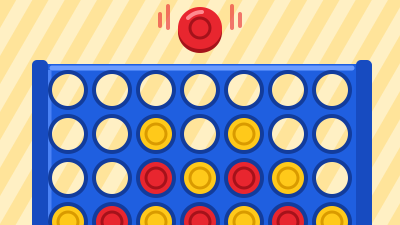
How to beat the Four in a Row bot on every level
Why the first player wins Four in a Row, why the centre column matters, and exact move sequences that beat our Easy, Normal and Hard bots.
5 min read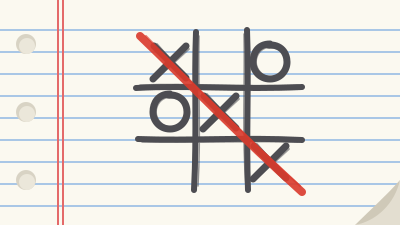
How to beat Tic-Tac-Toe: forks, the Easy bot and a sure draw
Why perfect play always draws, the one reply that saves you against the Hard bot, and how to set the forks that beat Easy four games in five.
5 min read
How to beat the Isolate bot: exits, regions and the Hard search
Why one exit is already a loss, how room and shape decide a split board, what the Hard bot removes first, and a full game in which we beat it.
5 min readArcade
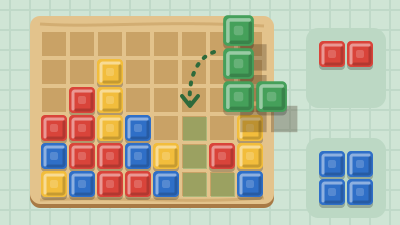
How to score high in Block Fit: what actually ends your runs
Which pieces end most Block Fit games, why filling the centre first halves your score, and the habits that doubled our test player's results.
5 min read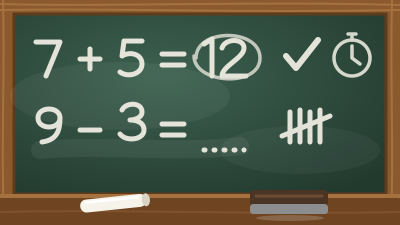
Number Rush: what the questions are made of, and how to go faster
The exact sums Number Rush asks at each level, read from the game's code, and the mental-maths shortcuts that pay off for exactly those numbers.
5 min read
How to reach 2048: why the corner rule alone fails
What the corner strategy is really worth, the two-move lookahead that turns it into a 2048 half the time, and why 2048 is impossible on our 3×3 board.
5 min read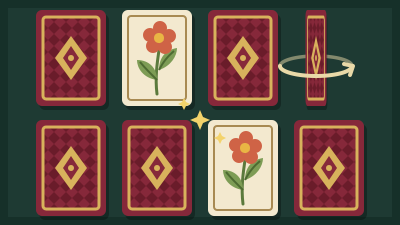
How to win Memory in fewer moves: perfect play and a grid trick
The move counts a perfect memory gets on 6, 8 and 12 pairs, the one rule about your second card that most players break, and a grid trick that makes the cards stick.
5 min read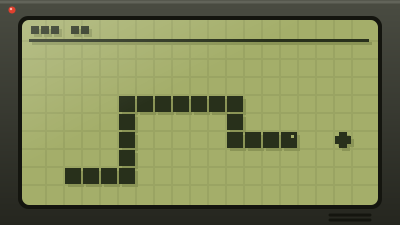
How to score big in Snake: lanes, tail-chasing and the perfect loop
How our Snake speeds up, the tail rule that kills most long snakes, and the route that is guaranteed to fill the whole board, with what each approach scored.
5 min read